

Income tax disputes arise when taxpayers and authorities disagree regarding assessments, deductions, exemptions, penalties, or compliance obligations. Such disputes affect individuals, companies, startups, trusts, NGOs, professionals, and NRIs. Therefore, timely legal intervention protects financial interests and statutory rights. Rajendra Civil Law Firm assists clients before tax authorities, appellate forums, tribunals, and constitutional courts. Professional representation reduces procedural mistakes and strengthens legal arguments. Tax litigation requires knowledge of substantive law and procedural compliance. Moreover, taxpayers must understand available remedies under the Income-tax Act, 1961. Effective legal support helps resolve disputes through appeals, revisions, rectification applications, and writ proceedings. Strategic representation also minimizes prolonged litigation and financial exposure. Businesses often face scrutiny assessments, reassessments, and penalty proceedings. Consequently, experienced legal counsel becomes essential. Proper documentation, legal research, and forum-specific advocacy improve outcomes and ensure compliance with applicable laws and judicial precedents.
Resolving Income Tax Disputes: Expert Legal Representation – Rajendra Civil Law Firm
Common Causes of Income Tax Litigation
Income tax litigation develops from various assessment and enforcement actions. Authorities may question deductions, exemptions, transfer pricing arrangements, or reported income. Consequently, taxpayers receive notices seeking clarification or supporting records. Disputes frequently involve unexplained cash credits, business expenditure claims, capital gains calculations, and TDS compliance. Search and seizure proceedings also generate substantial litigation. Furthermore, reassessment notices create jurisdictional and procedural challenges. Corporate taxpayers often face transfer pricing disputes and international taxation issues. Professionals and salaried individuals encounter disagreements regarding exemptions and deductions. The legal process requires examination of facts, records, and statutory provisions. Skilled representation ensures proper responses during assessment proceedings. Early intervention often prevents escalation into prolonged litigation. Taxpayers should maintain complete documentation and seek legal advice immediately after receiving notices. Prompt action preserves procedural rights and strengthens future appellate remedies before competent forums.
Importance of Professional Tax Litigation Support
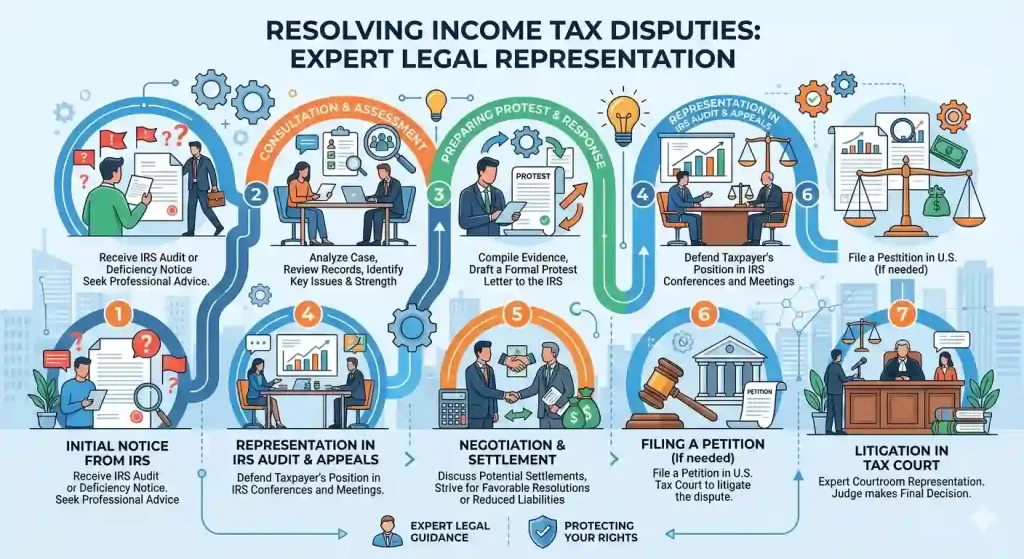
Professional tax representation improves compliance and dispute resolution strategies. Tax authorities follow statutory procedures that require timely responses and documentary evidence. Therefore, taxpayers must understand legal obligations and procedural timelines. Experienced advocates analyze notices, assessment orders, and supporting materials comprehensively. They identify jurisdictional defects, legal inconsistencies, and procedural violations. Moreover, strategic representation helps taxpayers present accurate facts and legal submissions. Effective advocacy before appellate authorities improves prospects for favorable outcomes. Legal professionals also assist during surveys, searches, and investigations. Businesses benefit from risk assessments and compliance reviews before disputes arise. Representation extends to settlement discussions and alternative dispute mechanisms where available. Proper legal guidance reduces financial exposure and reputational risks. Consequently, taxpayers can focus on personal and commercial activities while litigation proceeds through established statutory channels and judicial forums.
Legal Framework Governing Income Tax Disputes
Income tax disputes operate within a structured statutory framework. The primary legislation remains the Income-tax Act, 1961 and associated rules. Authorities exercise powers during assessment, reassessment, investigation, and recovery proceedings. Taxpayers possess rights to challenge adverse decisions through statutory remedies. Furthermore, constitutional remedies remain available in appropriate circumstances. Courts frequently interpret provisions affecting deductions, exemptions, penalties, and procedural safeguards. Legal representation requires understanding judicial precedents and administrative instructions. The framework also intersects with the Constitution of India and principles of natural justice. Additionally, documentary evidence plays a crucial role during proceedings. Certain disputes involve corporate governance, contractual obligations, and financial regulations. Professional assistance ensures compliance with procedural requirements and effective presentation of legal arguments. Sound legal strategy aligns factual evidence with applicable statutory provisions and binding judicial decisions.
Authorities Involved in Income Tax Proceedings
Multiple authorities participate in tax administration and dispute resolution. Assessment proceedings generally commence before the Assessing Officer. Thereafter, appellate remedies become available against adverse orders. The Principal Commissioner and Commissioner exercise supervisory and revisional powers. Taxpayers may also approach the Commissioner of Income Tax (Appeals) for relief. Furthermore, specialized tribunals hear appeals involving substantial factual and legal issues. Higher judicial forums examine constitutional and significant legal questions. Government departments maintain investigative and enforcement functions under statutory provisions. Authorities issue notices, conduct inquiries, and determine tax liabilities. Consequently, taxpayers require organized documentation and legal preparedness. Professional representation facilitates communication with authorities and ensures procedural compliance. Effective advocacy before each forum strengthens legal positions and protects taxpayer rights throughout the dispute resolution process.
Types of Income Tax Disputes Faced by Taxpayers
Taxpayers encounter diverse categories of tax disputes. Common issues include assessment additions, reassessment proceedings, penalty notices, and prosecution risks. Businesses frequently challenge disallowance of expenditure and depreciation claims. Transfer pricing adjustments create substantial disputes for multinational enterprises. Furthermore, taxpayers contest classification of income and valuation issues. Search and seizure proceedings often generate complex litigation. Individuals may dispute capital gains computations and exemption eligibility. NRIs face issues involving residency status and international taxation. NGOs encounter questions regarding charitable exemptions and regulatory compliance. The legal approach depends upon facts, records, and statutory interpretation. Early case evaluation identifies strengths and weaknesses. Therefore, professional assistance remains important during every stage. Strategic planning improves prospects for favorable settlements, appellate relief, or judicial intervention where necessary.
Role of Rajendra Civil Law Firm in Tax Litigation
Rajendra Civil Law Firm provides comprehensive legal support for income tax disputes. The firm assists taxpayers during assessments, investigations, appeals, and recovery proceedings. Experienced professionals evaluate notices and formulate effective responses. Consequently, clients receive practical guidance tailored to their circumstances. Representation extends before appellate authorities, tribunals, and constitutional courts. The firm also assists companies, startups, NGOs, professionals, and NRIs. Legal teams prepare written submissions, evidence compilations, and appellate documents. Furthermore, preventive compliance advice helps reduce future litigation risks. Effective communication with authorities often resolves issues at early stages. Detailed legal research strengthens arguments and improves procedural compliance. Every case receives strategic analysis based upon facts and applicable law. Professional representation protects taxpayer rights and promotes efficient dispute resolution within established legal frameworks.
Forums, Remedies, Appeals and Litigation Strategy
Assessment Proceedings and Notice Management
Assessment proceedings represent the foundation of most tax disputes. Authorities issue notices seeking information, explanations, and supporting records. Therefore, taxpayers must respond accurately within prescribed timelines. Incomplete responses often create adverse consequences. Professional legal review helps identify relevant facts and legal issues. Advocates prepare comprehensive replies supported by documentary evidence. Furthermore, procedural compliance preserves future appellate rights. Assessment disputes may involve income classification, deduction claims, or unexplained transactions. Strategic engagement with authorities often narrows disputed issues. Taxpayers should maintain organized financial records and correspondence. Early legal intervention reduces misunderstandings and procedural errors. Consequently, the assessment stage offers valuable opportunities for dispute resolution. Effective representation ensures that taxpayer positions receive proper consideration before final assessment orders are passed.
Appeals Before Commissioner of Income Tax (Appeals)
Taxpayers dissatisfied with assessment orders may file statutory appeals. The Commissioner of Income Tax (Appeals) examines legal and factual challenges comprehensively. Therefore, appellate memoranda must present clear grounds and supporting evidence. Professional drafting significantly influences appellate outcomes. Appellate proceedings allow taxpayers to challenge additions, disallowances, and penalties. Furthermore, legal arguments may address jurisdictional and procedural defects. Documentary evidence plays a crucial role during hearings. Advocates prepare written submissions and present oral arguments effectively. Timely filing remains essential because limitation periods apply strictly. Consequently, taxpayers should seek legal assistance immediately after receiving adverse orders. A well-prepared appeal improves prospects for relief and may prevent further litigation. Strategic representation ensures compliance with procedural requirements and appellate practice standards.
Income Tax Appellate Tribunal Representation
The Income Tax Appellate Tribunal serves as a specialized adjudicatory forum. It hears appeals involving complex factual and legal questions. Consequently, tribunal advocacy requires specialized knowledge and litigation experience. Detailed preparation remains essential because tribunal decisions often influence future proceedings. Advocates analyze assessment records, appellate orders, and judicial precedents thoroughly. Furthermore, persuasive arguments help clarify disputed legal issues. Tribunal proceedings address transfer pricing matters, business expenditure claims, and penalty disputes. Documentary evidence and case law significantly affect outcomes. Professional representation improves case presentation and procedural compliance. Taxpayers benefit from strategic planning and detailed legal analysis. Effective advocacy before the tribunal strengthens prospects for favorable decisions and protects taxpayer interests throughout the appellate process.
High Court and Supreme Court Remedies
Certain tax disputes involve substantial questions of law. In such cases, taxpayers may approach High Courts through statutory appeals or writ petitions. Constitutional courts examine legality, jurisdiction, and procedural fairness. Furthermore, taxpayers may challenge actions violating principles of natural justice. Significant matters sometimes proceed before the Supreme Court of India. Professional legal representation becomes particularly important during constitutional litigation. Advocates prepare detailed pleadings supported by statutory provisions and precedents. Courts consider broader legal implications affecting taxpayers nationally. Consequently, careful case selection and strategic planning remain essential. Judicial review provides protection against arbitrary administrative actions. Effective advocacy before constitutional courts safeguards taxpayer rights and contributes to legal clarity within the taxation framework.
Penalty Proceedings and Defense Strategies
Penalty proceedings require independent evaluation and legal defense. Authorities may initiate penalties for concealment, inaccurate particulars, or procedural noncompliance. Therefore, taxpayers should not treat penalty notices casually. Legal counsel examines statutory requirements and evidentiary standards carefully. Defenses often involve bona fide conduct, disclosure, and reasonable cause. Furthermore, procedural irregularities may affect validity of proceedings. Written submissions must address factual and legal issues comprehensively. Documentary evidence strengthens taxpayer explanations significantly. Professional representation improves prospects for penalty reduction or cancellation. Strategic defense begins immediately after receipt of notices. Consequently, timely action protects taxpayer interests and reduces financial exposure. Proper legal analysis ensures that authorities consider all relevant facts before imposing penalties.
Recovery Proceedings and Taxpayer Protection
Tax recovery actions can affect business operations and personal finances. Authorities possess statutory powers to recover outstanding tax demands. Therefore, taxpayers must act promptly after receiving recovery communications. Legal remedies may include stay applications and appellate challenges. Furthermore, courts sometimes intervene when recovery actions appear arbitrary. Professional representation helps taxpayers negotiate reasonable arrangements and protect assets. Advocates examine legality of demands and procedural compliance. Businesses particularly benefit from strategic planning during recovery disputes. Timely applications often prevent coercive enforcement measures. Consequently, taxpayers should seek immediate legal advice upon initiation of recovery proceedings. Effective legal support balances compliance obligations with protection of legitimate rights and commercial interests.
Table: Income Tax Dispute Forums and Remedies
| Forum | Common Issues | Remedy Available |
|---|---|---|
| Assessing Officer | Assessment disputes | Reply, Evidence, Hearing |
| CIT(A) | Additions, Penalties | Statutory Appeal |
| ITAT | Legal and factual disputes | Second Appeal |
| High Court | Substantial legal questions | Appeal/Writ |
| Supreme Court | National legal importance | Civil Appeal |
| CBDT Authorities | Administrative relief | Revision/Rectification |
Search, Survey and Investigation Proceedings
Income tax authorities conduct searches, surveys, and investigations under statutory powers. These proceedings often involve examination of books, digital records, and financial transactions. Therefore, taxpayers must understand their rights and obligations during official actions. Immediate legal representation helps prevent procedural misunderstandings and protects legitimate interests. Advocates monitor compliance with statutory safeguards and principles of natural justice. Furthermore, proper documentation supports explanations during post-search assessments. Businesses frequently face scrutiny regarding cash transactions, stock records, and undisclosed income allegations. Individuals may encounter questions concerning investments and property acquisitions. Strategic legal guidance assists taxpayers throughout investigation stages. Consequently, early intervention reduces risks arising from incorrect statements or incomplete disclosures. Effective representation ensures lawful conduct of proceedings and strengthens defenses during subsequent assessments and appeals.
Jurisdictional Issues and Legal Challenges
Jurisdiction forms a critical aspect of tax litigation. Authorities must exercise powers within statutory limits and procedural requirements. Therefore, taxpayers can challenge actions exceeding legal authority. Jurisdictional disputes often involve reassessment notices, limitation periods, and approval requirements. Professional legal analysis identifies procedural defects affecting validity of proceedings. Furthermore, courts consistently emphasize compliance with statutory safeguards. Successful jurisdictional challenges may invalidate assessments or enforcement actions. Businesses and individuals should review notices carefully before responding. Documentary evidence often supports objections regarding authority and procedure. Consequently, timely legal advice becomes essential. Strategic challenges preserve taxpayer rights and may significantly alter litigation outcomes. Effective representation combines procedural scrutiny with substantive legal arguments for comprehensive defense.
Reassessment Notices and Legal Remedies
Reassessment proceedings create significant concerns for taxpayers. Authorities may reopen completed assessments under prescribed circumstances. Therefore, taxpayers should examine reasons recorded and statutory compliance carefully. Legal counsel evaluates whether reopening satisfies jurisdictional requirements. Furthermore, reassessment actions frequently generate constitutional and procedural challenges. Taxpayers possess rights to seek information and raise objections. Written submissions should address factual inaccuracies and legal deficiencies. Judicial precedents often influence outcomes in reopening disputes. Consequently, strategic legal planning becomes crucial from the initial notice stage. Effective representation protects taxpayer interests and ensures procedural fairness. Early intervention may prevent unnecessary litigation and strengthen future appellate positions before competent forums.
Tax Disputes Affecting Companies and Businesses
Corporate taxpayers face complex regulatory and compliance obligations. Income tax disputes often involve transfer pricing, business restructuring, depreciation, and expenditure claims. Therefore, companies require specialized legal representation during assessments and appeals. Financial documentation and corporate records play central roles in litigation. Furthermore, cross-border transactions create international taxation concerns. Businesses must address compliance requirements while protecting commercial interests. Strategic legal advice helps manage risks arising from audits and investigations. Corporate litigation frequently involves substantial financial exposure. Consequently, proactive compliance and early legal intervention remain essential. Effective advocacy before authorities and tribunals strengthens legal positions. Comprehensive representation supports business continuity while disputes proceed through statutory forums and judicial mechanisms.
Tax Disputes Involving Individuals, NRIs and NGOs
Individuals, NRIs, and NGOs encounter unique tax challenges. Residency disputes, foreign income reporting, and exemption claims often generate litigation. Therefore, taxpayers must maintain accurate records and compliance systems. NGOs frequently face scrutiny regarding charitable activities and statutory registrations. Furthermore, NRIs encounter issues involving double taxation and overseas assets. Individuals may dispute capital gains calculations and deduction eligibility. Professional legal representation addresses sector-specific concerns effectively. Strategic advice helps taxpayers understand obligations and available remedies. Consequently, timely responses to notices improve prospects for favorable outcomes. Legal counsel assists during assessments, appeals, and judicial proceedings. Comprehensive support ensures compliance while protecting statutory rights and financial interests.
Related Legal Issues, Courts and Enforcement Aspects
Interaction with CPC, BNS, BNSS and BSA
Income tax disputes remain primarily civil and regulatory matters. However, related proceedings may intersect with other legal frameworks. The Code of Civil Procedure, 1908 influences procedural principles in certain judicial proceedings. Furthermore, the Bharatiya Nagarik Suraksha Sanhita, 2023 governs criminal procedure where prosecution issues arise. The Bharatiya Nyaya Sanhita, 2023 applies to criminal offenses beyond tax administration. Similarly, the Bharatiya Sakshya Adhiniyam, 2023 governs evidentiary principles before courts. Documentary evidence remains vital during litigation. Therefore, taxpayers should preserve records, communications, and financial documents carefully. Legal professionals analyze interactions between tax laws and related statutes. Consequently, integrated legal strategy strengthens overall defense and compliance planning. Effective representation considers every applicable legal framework and procedural safeguard.
Courts, Tribunals and Government Departments
Several forums participate in tax dispute resolution. The Income Tax Department administers assessments, investigations, and enforcement activities. Appeals proceed before the Commissioner of Income Tax (Appeals) and the Income Tax Appellate Tribunal. Furthermore, High Courts address substantial legal questions and constitutional challenges. The Supreme Court considers significant national issues involving taxation law. Government bodies such as the Central Board of Direct Taxes issue administrative instructions and policy guidance. Taxpayers may also interact with enforcement and investigative authorities during specific proceedings. Consequently, forum-specific strategy becomes essential. Professional representation ensures compliance with procedural requirements before each authority. Effective advocacy improves prospects for favorable outcomes across administrative and judicial forums.
Police Stations, Prosecution Risks and Legal Assistance
Certain serious tax matters may involve prosecution proceedings. Although most disputes remain civil, allegations involving fraud or related offenses may attract criminal scrutiny. Therefore, taxpayers should obtain immediate legal advice when prosecution concerns arise. Nearby police stations may become relevant where complaints or investigations involve connected criminal allegations. Professional representation protects procedural rights during questioning and investigations. Furthermore, legal counsel coordinates responses across multiple authorities. Documentary evidence and factual accuracy remain essential during criminal proceedings. Taxpayers should avoid speculative statements and preserve all relevant records. Consequently, integrated legal strategy becomes critical. Effective representation addresses both regulatory and criminal aspects while ensuring compliance with constitutional protections and statutory safeguards.
Why Choose Rajendra Civil Law Firm
Rajendra Civil Law Firm offers comprehensive support across every stage of tax litigation. The firm assists individuals, companies, NGOs, startups, professionals, and NRIs. Therefore, clients receive solutions tailored to specific legal and commercial objectives. Experienced professionals analyze notices, prepare defenses, and conduct appellate advocacy. Furthermore, the firm emphasizes procedural compliance and strategic planning. Representation extends before authorities, tribunals, High Courts, and the Supreme Court. Clients benefit from detailed legal research and practical guidance. Consequently, disputes receive focused attention and effective management. The firm combines legal knowledge with client-centered service standards. Professional representation protects taxpayer rights while pursuing efficient and favorable dispute resolution outcomes.
Conclusion
Income tax disputes require prompt action, accurate documentation, and informed legal strategy. Taxpayers face challenges involving assessments, reassessments, penalties, investigations, and recovery proceedings. Therefore, professional representation remains essential throughout the dispute resolution process. Statutory remedies provide opportunities to challenge adverse decisions before appellate and judicial forums. Furthermore, procedural compliance significantly influences litigation outcomes. Businesses, individuals, NGOs, and NRIs benefit from early legal intervention and strategic planning. Courts and tribunals continue shaping taxation law through important decisions. Consequently, taxpayers should seek qualified assistance immediately after receiving notices or adverse orders. Rajendra Civil Law Firm delivers comprehensive representation across all stages of tax litigation. Effective legal support protects rights, minimizes risks, and promotes successful resolution of income tax disputes.
Read More
- GST Litigation: How to Access the Best Legal Services?
- Income Tax Appellate Tribunal: Your Key to Resolving Tax Disputes
- Income Tax Litigation: Strategies for Success
- Expert Negligence Claims Lawyers in Chennai
- GST Attorney: How to Hire the Best Reliable Tax Lawyers?
- Navigating Foreign Exchange Management Tribunal Proceedings
Frequently Asked Questions
Immediately review the notice, collect supporting documents, verify timelines, and obtain legal advice before submitting any response.
Yes. Taxpayers may file statutory appeals before the Commissioner of Income Tax (Appeals) and higher forums.
The Tribunal hears appeals involving factual and legal disputes arising from orders passed by appellate authorities.
Yes. Taxpayers may challenge reassessment notices based on jurisdictional defects, limitation issues, or procedural violations.
Yes. NGOs face exemption issues, while NRIs commonly encounter residency, foreign income, and double taxation disputes.
Professional representation ensures compliance, develops strong legal arguments, protects rights, and improves litigation outcomes.