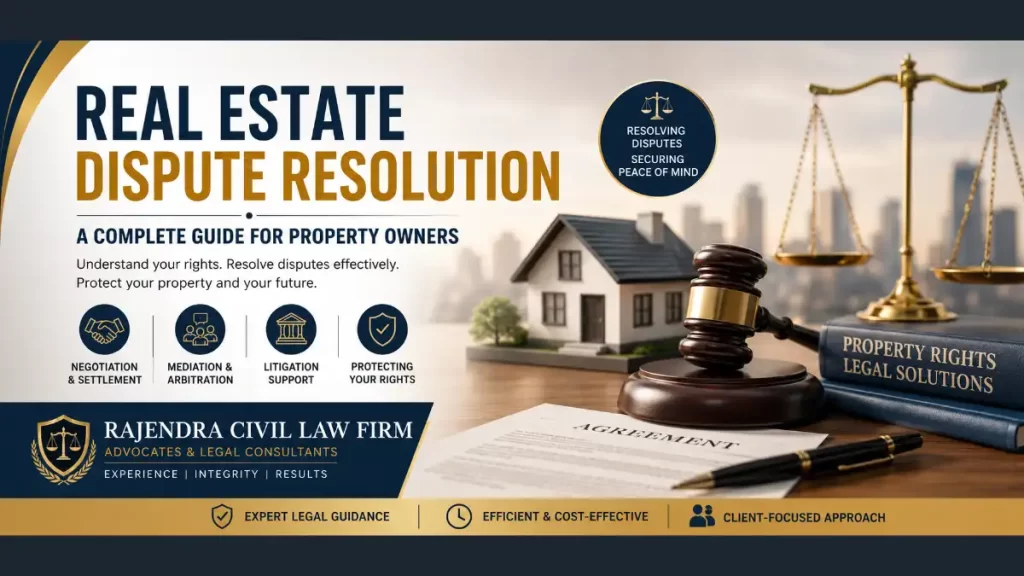
Real estate transactions often involve substantial investments, making property disputes one of the most stressful legal challenges faced by individuals, families, businesses, and investors. Whether it concerns ownership conflicts, boundary disputes, title defects, contract breaches, possession issues, landlord-tenant disagreements, or inheritance claims, understanding the real estate dispute resolution process is essential for protecting your rights and investments.
Introduction
Real Estate Dispute Resolution refers to the legal methods used to resolve conflicts involving immovable properties through negotiation, mediation, arbitration, settlement, or court proceedings. A well-planned dispute resolution strategy can save considerable time, money, and effort while preserving valuable property rights.
This comprehensive guide explains how real estate dispute resolution works, common causes of property disputes, available legal remedies, and the role of experienced real estate lawyers in achieving effective solutions.
What Is Real Estate Dispute Resolution?
Real Estate Dispute Resolution is the process of resolving disagreements relating to land, buildings, apartments, commercial properties, leasehold interests, and real estate transactions.
The objective is to resolve disputes fairly, efficiently, and legally while protecting the rights of all stakeholders involved.
Property disputes may arise from:
- Ownership conflicts
- Title defects
- Encroachments
- Boundary disputes
- Sale agreement breaches
- Builder-buyer disputes
- Landlord-tenant conflicts
- Inheritance claims
- Easement rights disputes
- Joint ownership disagreements
- Property partition disputes
Real estate dispute resolution can occur through both alternative dispute resolution mechanisms and litigation before competent courts and tribunals.
Why Is Real Estate Dispute Resolution Important?
Property disputes can have serious financial and legal consequences if not addressed promptly.
Effective dispute resolution helps:
- Protect ownership rights
- Prevent unlawful dispossession
- Safeguard property investments
- Reduce litigation expenses
- Avoid prolonged court battles
- Preserve business and family relationships
- Facilitate smooth property transactions
- Ensure legal compliance
Early intervention often prevents disputes from escalating into costly and lengthy litigation.
Common Types of Real Estate Disputes
1. Property Ownership Disputes
Ownership disputes arise when two or more parties claim rights over the same property.
Examples include:
- Competing title claims
- Fraudulent transfers
- Multiple sale transactions
- Joint ownership disagreements
- Family settlement disputes
2. Property Title Disputes
Title disputes occur when ownership records contain defects or inconsistencies.
Common issues include:
- Missing title documents
- Forged deeds
- Defective registrations
- Revenue record discrepancies
- Unclear chain of title
3. Boundary and Encroachment Disputes
Boundary disputes frequently arise between neighboring property owners.
Issues may involve:
- Encroachments
- Fence disputes
- Survey discrepancies
- Unauthorized construction
- Easement conflicts
4. Contract and Sale Agreement Disputes
Real estate contracts often become disputed when one party fails to perform contractual obligations.
Examples include:
- Non-payment of consideration
- Failure to execute sale deeds
- Delayed possession
- Breach of development agreements
- Misrepresentation by sellers
5. Landlord-Tenant Disputes
Common landlord-tenant conflicts include:
- Non-payment of rent
- Illegal eviction
- Security deposit disputes
- Maintenance obligations
- Lease violations
6. Builder and Developer Disputes
Property buyers frequently face issues such as:
- Project delays
- Construction defects
- Failure to obtain approvals
- Deviation from sanctioned plans
- Possession delays
How Does Real Estate Dispute Resolution Work?
The real estate dispute resolution process generally follows several stages.
Step 1: Legal Assessment
A detailed review of:
- Title documents
- Sale deeds
- Agreements
- Revenue records
- Court records
- Encumbrance certificates
- Government approvals
This helps identify the strengths and weaknesses of the case.
Step 2: Legal Notice
A formal legal notice may be issued demanding:
- Compliance
- Rectification
- Performance
- Possession
- Compensation
Many disputes are resolved at this stage without court intervention.
Step 3: Negotiation
Parties attempt to reach a mutually acceptable settlement through discussions.
Negotiated settlements are often the fastest and least expensive solution.
Step 4: Mediation
Mediation involves a neutral third party assisting disputing parties in finding common ground.
Benefits include:
- Confidentiality
- Faster resolution
- Reduced costs
- Preservation of relationships
Step 5: Arbitration
Where contracts contain arbitration clauses, disputes may be referred to arbitration.
Arbitration offers:
- Private proceedings
- Specialized adjudication
- Faster outcomes
- Enforceable awards
Step 6: Litigation
If alternative methods fail, parties may initiate legal proceedings before appropriate courts.
Litigation may involve:
- Civil suits
- Injunction applications
- Specific performance suits
- Partition actions
- Declaration suits
- Possession proceedings
What Are the Benefits of Real Estate Dispute Resolution?
Faster Resolution
Alternative dispute resolution methods often conclude significantly faster than conventional litigation.
Cost Efficiency
Resolving disputes through negotiation or mediation can substantially reduce legal expenses.
Confidentiality
Unlike court proceedings, mediation and arbitration generally remain private.
Preservation of Relationships
Family members, business partners, landlords, tenants, and neighboring property owners may preserve valuable relationships through amicable resolution.
Greater Control
Parties often have more flexibility and control over settlement outcomes.
Real Estate Conflict Resolution Strategies
Successful dispute resolution depends upon adopting the appropriate strategy.
Early Legal Review
Prompt legal evaluation often identifies risks before they escalate.
Document Verification
Careful examination of title documents helps uncover defects and inconsistencies.
Evidence Preservation
Maintaining records such as:
- Agreements
- Receipts
- Correspondence
- Survey reports
- Photographs
can significantly strengthen a claim.
Settlement-Oriented Approach
Many property disputes benefit from practical commercial settlements rather than prolonged litigation.
Strategic Litigation
Where settlement is impossible, timely legal action may be necessary to protect rights and prevent further losses.
The Role of Expert Real Estate Lawyers
Experienced real estate lawyers provide crucial assistance throughout the dispute resolution process.
Their role may include:
- Title verification
- Legal due diligence
- Drafting notices
- Negotiation support
- Mediation representation
- Arbitration proceedings
- Court litigation
- Settlement structuring
A knowledgeable lawyer can identify legal risks, evaluate remedies, and develop an effective strategy tailored to the specific dispute.
How Can Property Owners Avoid Real Estate Disputes?
Preventive measures can significantly reduce the likelihood of future disputes.
Property owners should:
Verify Title Before Purchase
Conduct thorough legal due diligence before acquiring property.
Obtain Encumbrance Certificates
Verify whether the property is free from mortgages, charges, or pending claims.
Review Government Approvals
Ensure compliance with zoning, planning, and building regulations.
Execute Proper Agreements
All transactions should be documented through professionally drafted legal instruments.
Maintain Updated Records
Preserve original title documents, tax receipts, and registration records.
Conduct Periodic Property Audits
Regular reviews can identify emerging issues before they become major disputes.
Frequently Asked Questions
What is Real Estate Dispute Resolution?
Real Estate Dispute Resolution is the legal process used to resolve conflicts relating to ownership, possession, title, boundaries, contracts, leases, and other property-related matters.
How long does a property dispute take to resolve?
The duration depends on the complexity of the dispute, available evidence, applicable laws, and the chosen resolution mechanism. Negotiated settlements are generally faster than litigation.
Is mediation effective in property disputes?
Yes. Mediation often provides a practical, confidential, and cost-effective method for resolving many real estate conflicts.
When should I consult a real estate dispute lawyer?
You should seek legal advice immediately upon discovering a title issue, ownership conflict, encroachment, contractual breach, or any threat to your property rights.
Can all real estate disputes be settled without court proceedings?
Not always. While many disputes can be resolved through negotiation, mediation, or arbitration, some matters require judicial intervention.
Conclusion
Real estate disputes can jeopardize valuable investments and create long-term legal complications. Understanding the real estate dispute resolution process enables property owners to take informed decisions and protect their interests effectively.
Whether the issue involves ownership claims, title defects, contract breaches, landlord-tenant conflicts, boundary disputes, or possession issues, timely legal advice and a well-planned dispute resolution strategy can significantly improve outcomes.
Professional legal guidance, proper documentation, and early intervention remain the most effective tools for resolving real estate disputes and safeguarding property rights.
Rajendra Civil Law Firm provides legal assistance in property disputes, title verification, ownership conflicts, partition matters, injunction proceedings, real estate litigation, mediation, arbitration, and comprehensive dispute resolution services for property owners across India.
Read More
- Resolving Real Estate Disputes: Expert Legal Guidance and Representation
- Efficient Property Registration Services to Secure Your Ownership
- Resolve Property Disputes with Top Civil Lawyers in Your Area: Expert support
- Expert Legal Services for Property Matters
- Bankruptcy Law and Creditors’ Rights: What You Need to Know?