
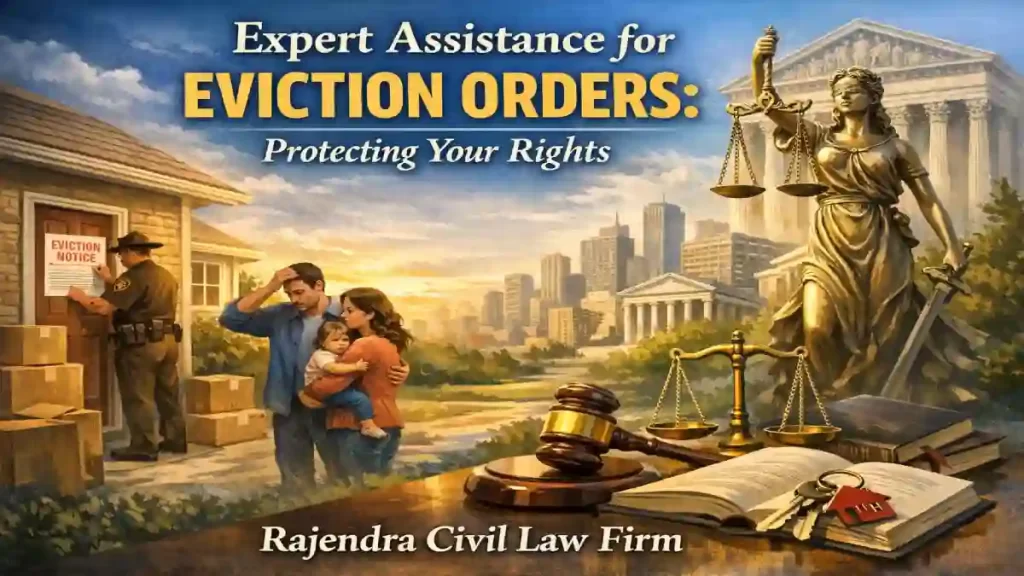
Expert Assistance for Eviction Orders – Eviction is one of the most stressful legal situations a person can face. Whether you are a tenant asked to leave or a landlord seeking possession of your property, eviction orders can create confusion, fear, and financial pressure. Therefore, understanding your rights and acting quickly becomes very important. With proper legal guidance, you can protect your interests and avoid costly mistakes.
At Rajendra Civil Law Firm: Best Civil Advocates, we provide expert assistance to ensure that eviction matters are handled fairly, legally, and efficiently. In this article, we explain everything you need to know about eviction orders, your rights, and how professional legal help can make a difference.
Expert Assistance for Eviction Orders: Protecting Your Rights – Rajendra Civil Law Firm: Best Civil Advocates
What Is an Eviction Order?
An eviction order is a legal directive issued by a court that requires a tenant to vacate a property. However, it is important to understand that a landlord cannot simply ask a tenant to leave without following proper legal procedures. Instead, eviction must follow a structured process defined by law.
In most cases, eviction orders are passed due to reasons such as:
- Non-payment of rent
- Violation of lease terms
- Property misuse
- Expiry of tenancy agreement
- Personal requirement of the landlord
Although these reasons may seem straightforward, disputes often arise regarding their validity. Therefore, both landlords and tenants must approach eviction matters carefully and legally.
Why Legal Assistance Is Crucial in Eviction Matters
Many people assume eviction is a simple process. However, this assumption can lead to serious legal problems. In reality, eviction laws are complex and vary depending on jurisdiction and specific circumstances.
Firstly, tenants may face illegal eviction if landlords bypass legal procedures. Secondly, landlords may lose their case if they fail to provide proper documentation or notice. Therefore, seeking expert legal assistance becomes essential.
At Rajendra Civil Law Firm, we ensure that:
- Legal procedures are properly followed
- Your rights are fully protected
- All documentation is accurate and complete
- Court representation is strong and effective
As a result, you can handle eviction matters with confidence and clarity.
Understanding Tenant Rights in Eviction Cases
Tenants often feel powerless during eviction proceedings. However, the law provides several protections to ensure fairness.
1. Right to Proper Notice
A landlord must provide a written notice before initiating eviction. This notice must clearly state the reason and give sufficient time to respond.
2. Protection Against Illegal Eviction
A tenant cannot be forcibly removed without a court order. For example, changing locks, cutting utilities, or threatening the tenant is illegal.
3. Right to Contest the Eviction
Tenants have the right to challenge eviction in court. They can present evidence, question the landlord’s claims, and seek relief.
4. Right to Fair Hearing
Courts ensure that both parties are heard before passing an eviction order. Therefore, tenants get an opportunity to defend themselves.
Because of these rights, tenants should never vacate a property without understanding their legal position.
Landlord Rights in Eviction Proceedings
While tenant protections are strong, landlords also have legal rights. In fact, the law aims to balance the interests of both parties.
1. Right to Receive Rent
Landlords can initiate eviction if tenants fail to pay rent regularly.
2. Right to Property Use
If the tenant misuses the property or violates lease terms, landlords can seek eviction.
3. Right to Reclaim Property
Landlords can recover possession for personal use, renovation, or redevelopment.
4. Right to Legal Remedy
If tenants refuse to vacate despite valid reasons, landlords can approach the court for eviction orders.
However, landlords must follow proper legal channels. Otherwise, their case may be dismissed.
Step-by-Step Eviction Process
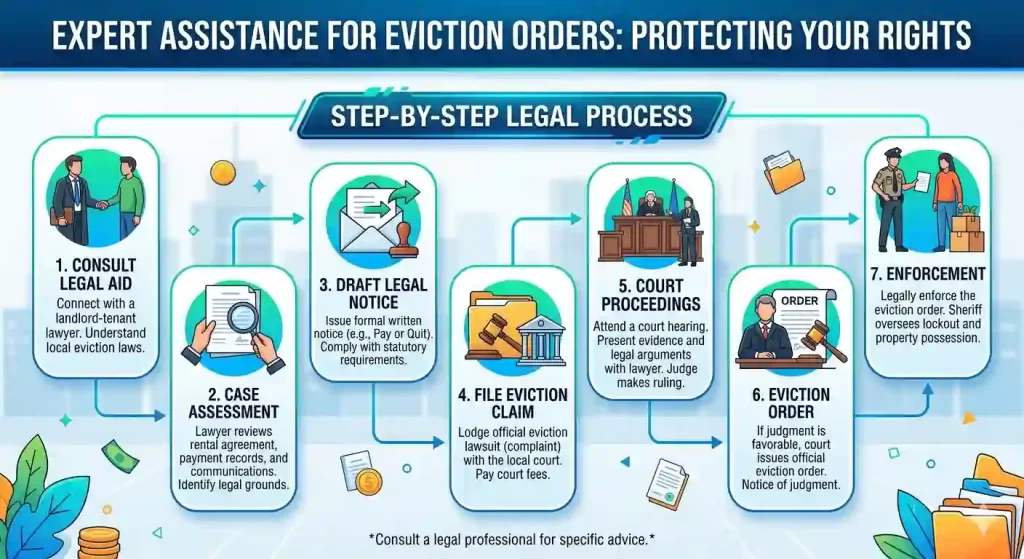
Understanding the eviction process helps both parties act wisely. Although procedures may vary, the general steps include:
Step 1: Issuing Legal Notice
The landlord sends a formal eviction notice stating reasons and giving time to vacate.
Step 2: Filing a Case
If the tenant does not comply, the landlord files a case in the appropriate court.
Step 3: Court Proceedings
Both parties present their arguments, documents, and evidence.
Step 4: Court Decision
The court examines the facts and passes an eviction order if justified.
Step 5: Execution of Order
If the tenant still refuses to vacate, the court order is enforced through legal authorities.
Since each step involves legal technicalities, professional assistance is highly recommended.
Common Challenges in Eviction Cases
Eviction disputes often become complicated due to various issues. For instance:
- Disputes over unpaid rent
- Lack of written agreements
- False allegations by either party
- Delay in court proceedings
- Emotional stress and pressure
Because of these challenges, handling eviction without legal guidance can lead to unfavorable outcomes. Therefore, expert intervention becomes necessary.
How Rajendra Civil Law Firm Can Help
At Rajendra Civil Law Firm, we provide comprehensive support for both landlords and tenants. Our approach focuses on clarity, strategy, and legal strength.
1. Legal Consultation
We carefully analyze your situation and provide clear advice on your rights and options.
2. Drafting Notices and Documents
We ensure that all legal notices and documents are properly prepared and legally valid.
3. Court Representation
Our experienced advocates represent you effectively in court, presenting strong arguments.
4. Negotiation and Settlement
Whenever possible, we aim to resolve disputes through negotiation, saving time and costs.
5. Execution of Orders
We assist in enforcing court orders to ensure compliance.
As a result, our clients receive complete support at every stage of the eviction process.
Importance of Documentation in Eviction Cases
Proper documentation plays a key role in eviction matters. Without valid records, even a strong case can fail.
Essential documents include:
- Rental agreement
- Rent receipts
- Communication records
- Property ownership documents
- Notices served
Therefore, both landlords and tenants should maintain clear and organized records. This practice not only strengthens your case but also speeds up the legal process.
Tips for Tenants Facing Eviction
If you are a tenant facing eviction, do not panic. Instead, take the following steps:
- Carefully read the eviction notice
- Verify the reason for eviction
- Check your rental agreement
- Gather relevant documents
- Seek legal advice immediately
Most importantly, avoid ignoring the notice. Taking timely action can protect your rights and may even prevent eviction.
Tips for Landlords Seeking Eviction
If you are a landlord, it is equally important to act lawfully. Therefore, consider the following:
- Always provide proper written notice
- Maintain records of rent and communication
- Avoid illegal eviction methods
- Follow court procedures strictly
- Consult a legal expert before filing a case
By doing so, you can ensure a smooth and legally valid eviction process.
Role of Mediation in Eviction Disputes
In many cases, eviction disputes can be resolved without going to court. Mediation provides a practical solution where both parties discuss and settle the issue amicably.
For example:
- Tenants may agree to vacate within a fixed time
- Landlords may offer flexible payment options
- Both parties can avoid legal costs and delays
At Rajendra Civil Law Firm, we encourage mediation wherever possible. This approach saves time and preserves relationships.
Consequences of Ignoring Eviction Orders
Ignoring an eviction order can lead to serious consequences. For tenants, this may include forced removal by authorities. For landlords, illegal actions can result in penalties and case dismissal.
Therefore, compliance with legal procedures is essential for both parties. Acting responsibly ensures a fair and lawful outcome.
Why Choose Rajendra Civil Law Firm?
Choosing the right legal partner can make all the difference. At Rajendra Civil Law Firm, we focus on:
- Client-focused approach
- Transparent communication
- Strong legal expertise
- Timely action and support
- Practical and effective solutions
Because of our commitment, we have earned the trust of clients facing complex civil disputes, including eviction matters.
Frequently Asked Questions
An eviction order is a legal direction from a court requiring a tenant to vacate a property. It is issued after proper notice and hearing, usually due to non payment of rent, breach of agreement, or lawful personal requirement of the landlord.
No, a landlord cannot legally evict a tenant without following due process of law. Any attempt such as changing locks, cutting utilities, or forcing the tenant out is illegal. A proper notice and court approval are necessary before eviction can take place.
A tenant should carefully read the notice, verify the reason mentioned, and check the rental agreement. Then, they should gather documents, respond within the given time, and seek legal advice. Taking prompt action can help in contesting or delaying eviction legally.
A lawyer can guide both tenants and landlords by explaining legal rights, drafting proper notices, and representing them in court. They also help in negotiating settlements and ensuring that all procedures are legally correct, which improves the chances of a favorable outcome.
The duration of an eviction case depends on factors like court workload, complexity of the dispute, and cooperation between parties. Some cases resolve in a few months, while others may take longer. Proper legal assistance can help speed up the process and avoid unnecessary delays.
Conclusion
Eviction orders are serious legal matters that require careful handling. Whether you are a tenant protecting your home or a landlord reclaiming your property, understanding your rights is essential. At the same time, following legal procedures ensures fairness and avoids unnecessary complications.
Therefore, seeking expert assistance is not just helpful—it is necessary. With the right legal support, you can navigate eviction proceedings confidently and protect your interests.
At Rajendra Civil Law Firm: Best Civil Advocates, we stand by your side at every step. From legal advice to court representation, we ensure that your rights are protected and your case is handled with professionalism and care.
Read More
- Employment Disputes Resolved: Expert Legal Representation
- Declaration Suit: Your Path to Legal Clarity
- Pursuing Damage Suit Claims: Legal Expertise You Can Trust
- Navigating Customs, Excise, and Service Tax Appellate Tribunal (CESTAT)
- Mastering Corporate Laws: Your Comprehensive Guide
- Ministry of Housing and Urban Affairs (MoHUA)