
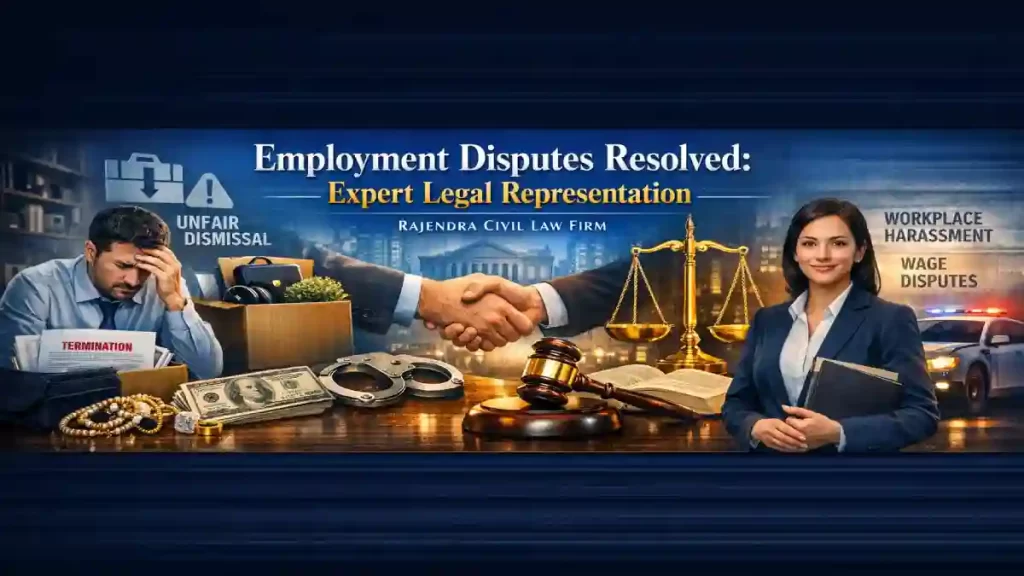
Employment Disputes Resolved – Employment relationships form the foundation of every successful business. Employers rely on employees to perform their duties efficiently, while employees depend on their employers for fair wages, safe working conditions, and respectful treatment. However, despite the best intentions, disputes between employers and employees sometimes arise.
Employment disputes can occur due to misunderstandings, contract violations, workplace harassment, wrongful termination, unpaid wages, or unfair treatment. When such issues arise, they can create stress, financial difficulties, and professional uncertainty for both parties.
Therefore, resolving employment disputes quickly and fairly becomes extremely important. Legal guidance helps individuals and organizations understand their rights and responsibilities under the law. With proper legal representation, disputes can be handled effectively through negotiation, mediation, or court proceedings.
At Rajendra Civil Law Firm: Best Civil Advocates, we provide professional legal assistance to employees, employers, companies, and organizations facing employment-related disputes. Our experienced civil advocates focus on protecting our clients’ interests while promoting fair and lawful resolutions.
Employment Disputes Resolved: Expert Legal Representation – Rajendra Civil Law Firm: Best Civil Advocates
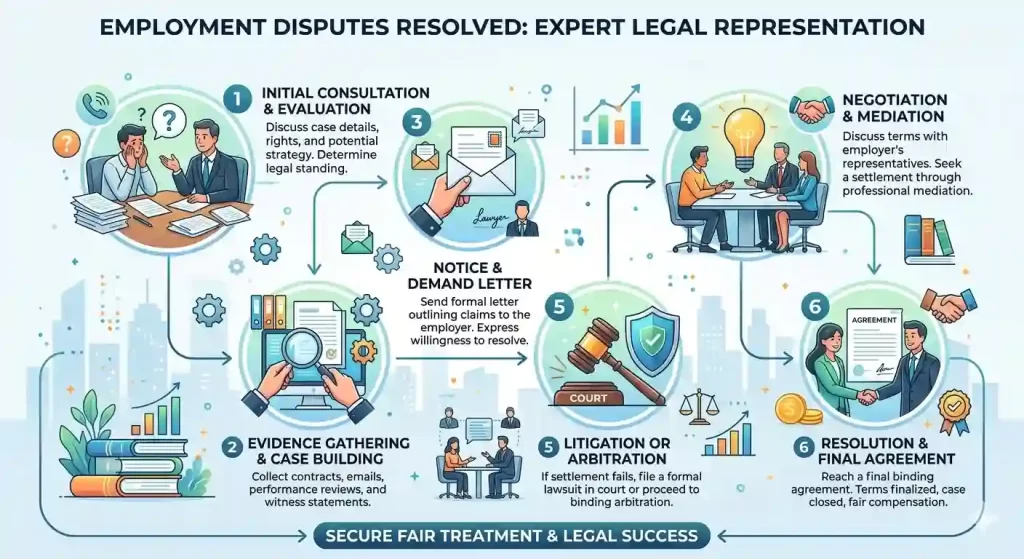
Understanding Employment Disputes
Employment disputes arise when disagreements occur between employers and employees regarding workplace rights, obligations, or expectations. These conflicts may involve issues related to employment contracts, workplace policies, salary payments, disciplinary actions, or termination of employment.
In many situations, disputes develop gradually. For example, an employee may feel that they have been treated unfairly or denied benefits that were promised during hiring. On the other hand, employers may face challenges when employees violate company policies or fail to fulfill contractual duties.
Because employment relationships involve legal obligations on both sides, resolving disputes often requires careful legal analysis and professional guidance.
Common Types of Employment Disputes
Employment disputes can take many forms. Understanding the most common types helps individuals and organizations recognize when legal assistance may be necessary.
Wrongful Termination
Wrongful termination occurs when an employee is dismissed from their job in violation of employment laws or contractual agreements. This may happen if the termination is discriminatory, retaliatory, or carried out without following proper procedures.
Employees who believe they were wrongfully terminated may seek legal remedies such as compensation, reinstatement, or settlement.
Unpaid Wages and Salary Disputes
Another frequent issue involves unpaid wages, delayed salary payments, or incorrect calculation of benefits. Employees have the right to receive payment for the work they perform according to agreed terms.
When employers fail to meet these obligations, legal action may be required to recover the unpaid amounts.
Workplace Harassment and Discrimination
Workplace harassment and discrimination are serious concerns. Employees may experience unfair treatment based on gender, religion, age, disability, or other personal characteristics.
Such conduct not only affects the dignity of employees but may also violate employment laws. Legal representation can help victims seek justice and ensure accountability.
Breach of Employment Contracts
Employment contracts establish the rights and duties of both employers and employees. When either party fails to comply with these terms, disputes may arise.
For example, disagreements may occur regarding job roles, confidentiality obligations, notice periods, or compensation packages.
Importance of Legal Representation in Employment Disputes
Employment disputes often involve complex legal rules and procedures. Without professional legal assistance, individuals may struggle to understand their rights or present their case effectively.
Legal representation plays a crucial role in resolving such disputes. Experienced lawyers carefully review employment contracts, company policies, and applicable laws to determine the best course of action.
At Rajendra Civil Law Firm: Best Civil Advocates, our legal team works closely with clients to understand the details of each dispute. We analyze the evidence, evaluate legal options, and develop strategies aimed at achieving fair and practical solutions.
Moreover, professional representation helps clients avoid unnecessary mistakes during negotiations or court proceedings.
Methods of Resolving Employment Disputes
Not every employment dispute needs to be resolved through litigation. In fact, many cases can be settled through alternative dispute resolution methods that save time and reduce stress.
Negotiation
Negotiation is often the first step in resolving workplace conflicts. Through direct communication, both parties attempt to reach a mutually acceptable solution.
Lawyers can assist during negotiations by advising clients, preparing settlement proposals, and ensuring that agreements protect their interests.
Mediation
Mediation involves a neutral third party who helps both sides discuss their concerns and explore possible solutions. The mediator does not impose a decision but facilitates constructive dialogue.
This method is particularly useful when both parties wish to maintain a professional relationship.
Arbitration
Arbitration is a more formal dispute resolution process where an arbitrator examines evidence and delivers a binding decision. Many employment contracts include arbitration clauses that require disputes to be resolved in this manner.
Litigation
When negotiations or mediation fail, disputes may proceed to court. Litigation involves presenting evidence, examining witnesses, and making legal arguments before a judge.
Although court proceedings may take longer, they sometimes become necessary to enforce legal rights or obtain fair compensation.
Legal Rights of Employees
Employees have several important rights under employment laws. These rights ensure fair treatment, workplace safety, and protection from exploitation.
Some key rights include:
- The right to fair wages and timely salary payments
- The right to a safe working environment
- Protection against discrimination and harassment
- The right to reasonable working hours and leave benefits
- The right to legal remedies in case of unfair treatment
When these rights are violated, employees can seek legal assistance to pursue justice and compensation.
Responsibilities of Employers
Employers also have legal responsibilities that must be fulfilled to maintain a fair workplace environment.
These responsibilities include:
- Following employment contracts and labor laws
- Paying wages and benefits on time
- Maintaining workplace safety standards
- Preventing harassment and discrimination
- Addressing employee grievances promptly
When employers fail to meet these obligations, legal disputes may arise. Professional legal advice can help businesses avoid such conflicts and remain compliant with the law.
Role of Civil Advocates in Employment Matters
Civil advocates play an essential role in resolving employment disputes. Their legal expertise helps clients navigate complicated regulations and procedures.
At Rajendra Civil Law Firm: Best Civil Advocates, our advocates provide comprehensive legal support that includes:
- Reviewing employment contracts and agreements
- Advising clients about legal rights and obligations
- Representing clients in negotiations and mediation
- Preparing legal documents and claims
- Advocating for clients in court proceedings
Our goal is to resolve disputes efficiently while protecting the interests of our clients.
Preventing Employment Disputes
Although legal remedies are available, preventing disputes is always preferable. Both employers and employees can take proactive steps to reduce workplace conflicts.
For employers, clear employment contracts and transparent workplace policies are essential. Proper documentation of employee performance, disciplinary actions, and workplace complaints can also prevent misunderstandings.
Employees, on the other hand, should carefully review their employment agreements and maintain professional communication with management.
When concerns arise, addressing them early often prevents escalation into serious legal disputes.
Why Choose Rajendra Civil Law Firm: Best Civil Advocates
Choosing the right legal team is an important decision when dealing with employment disputes. At Rajendra Civil Law Firm: Best Civil Advocates, we focus on delivering practical legal solutions tailored to each client’s needs.
Our firm provides:
- Professional legal consultation
- Careful evaluation of employment disputes
- Strong representation during negotiations and litigation
- Clear communication and legal guidance
- Commitment to protecting our clients’ rights
Because every employment dispute is unique, we approach each case with careful attention and strategic planning.
Frequently Asked Questions
Employment disputes arise when disagreements occur between employers and employees regarding workplace rights, responsibilities, or employment terms. These disputes may involve issues such as unpaid wages, wrongful termination, workplace harassment, breach of employment contracts, or unfair disciplinary actions. Sometimes disputes arise because of misunderstandings or lack of proper communication.
An employee should consider seeking legal advice when workplace problems cannot be resolved internally or when their legal rights appear to be violated. For example, if an employee faces sudden termination without proper notice, non-payment of salary, discrimination, or harassment at the workplace, legal consultation becomes important.
Employers can also benefit significantly from legal representation when dealing with workplace disputes. A lawyer helps employers understand their obligations under employment laws and ensures that company policies and decisions comply with legal requirements. Legal professionals can assist employers in handling employee grievances, conducting internal investigations, drafting employment contracts, and defending the organization if legal claims arise.
Employment disputes can be resolved through several methods depending on the circumstances. Negotiation is often the first step, where both parties attempt to reach a mutually acceptable agreement. If negotiation does not succeed, mediation may be used, where a neutral mediator helps both sides find a solution. Some disputes are resolved through arbitration, which involves a formal decision by an arbitrator. In more serious situations, the matter may proceed to court litigation.
A civil law firm plays a crucial role in handling employment disputes by providing legal advice, reviewing employment contracts, and representing clients during negotiations or court proceedings. Lawyers analyze the facts of each case, collect relevant evidence, and develop strategies to protect their clients’ rights. Professional legal representation ensures that disputes are handled properly and that clients receive fair treatment under the law.
Conclusion
Employment disputes can disrupt professional relationships and create significant stress for both employees and employers. Issues such as wrongful termination, unpaid wages, workplace harassment, and contract breaches require careful legal attention.
With expert legal representation, individuals and organizations can resolve disputes more effectively and protect their rights under the law. Legal professionals help clients understand their options, negotiate fair settlements, and pursue justice when necessary.
At Rajendra Civil Law Firm: Best Civil Advocates, we remain committed to helping clients navigate employment disputes with confidence. Through dedicated legal support and strategic advocacy, we strive to achieve fair resolutions that protect our clients’ interests.
Read More
- Declaration Suit: Your Path to Legal Clarity
- Pursuing Damage Suit Claims: Legal Expertise You Can Trust
- Navigating Customs, Excise, and Service Tax Appellate Tribunal (CESTAT)
- Mastering Corporate Laws: Your Comprehensive Guide
- FC-GPR Filing Services for Startups & Investors – Quick & Error-Free
- Ministry of Labour & Employment – Government of India