
Insider’s Guide to Insolvency – Insolvency and liquidation proceedings help creditors recover dues through a structured legal framework. The Insolvency and Bankruptcy Code, 2016 governs most corporate insolvency matters. Businesses often face debt defaults, creditor actions, and operational disruptions. Therefore, timely legal intervention protects stakeholder interests and preserves asset value. Rajendra Civil Law Firm assists companies, creditors, promoters, MSMEs, and investors during insolvency disputes. The process mainly involves the National Company Law Tribunal, insolvency professionals, and registered creditors. Financial institutions frequently initiate proceedings after persistent payment defaults. Moreover, operational creditors may seek remedies for unpaid invoices. Courts examine documentary evidence, contractual obligations, and financial records. Relevant laws may include CPC, BSA, BNSS, BNS, Companies Act, and SARFAESI provisions. Common issues include fraudulent transactions, preferential transfers, and asset concealment. Early legal advice often improves restructuring opportunities and reduces litigation risks. Proper compliance also supports transparent resolution and stakeholder confidence.
Insider’s Guide to Insolvency and Liquidation Proceedings – Rajendra Civil Law Firm
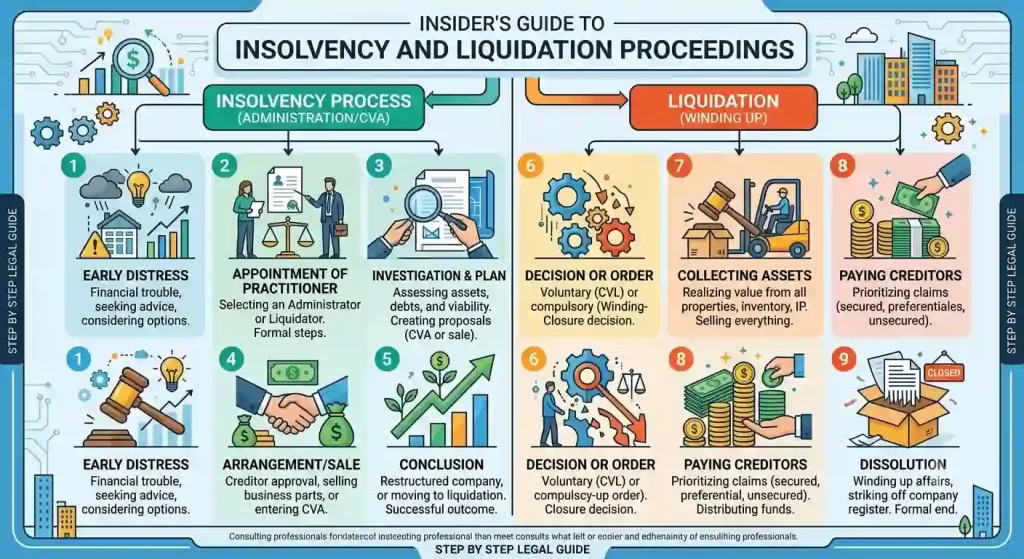
Key Authorities, Forums, and Departments
Several authorities supervise insolvency and liquidation proceedings across India. The Insolvency and Bankruptcy Board of India regulates insolvency professionals and related entities. NCLT functions as the primary adjudicating authority for corporate insolvency matters. Appeals generally proceed before the National Company Law Appellate Tribunal. Thereafter, substantial legal questions may reach the Supreme Court. Banks, asset reconstruction companies, and financial creditors regularly participate in proceedings. Police stations may investigate fraud, forgery, or criminal breach allegations. Furthermore, the Serious Fraud Investigation Office may examine serious corporate misconduct. The Ministry of Corporate Affairs maintains important compliance records. Stakeholders often interact with registered valuers and resolution professionals. Legal support includes claim verification, document review, litigation strategy, and hearing representation.
| Authority | Function |
|---|---|
| NCLT | Corporate insolvency adjudication |
| NCLAT | Appellate forum |
| IBBI | Regulatory oversight |
| MCA | Corporate compliance |
| Supreme Court | Final appellate review |
Common Legal Issues Triggering Insolvency Proceedings
Debt defaults frequently trigger insolvency applications before competent tribunals. Creditors often face delayed payments, disputed invoices, and non-performing assets. Consequently, businesses experience operational strain and declining liquidity. Promoters may confront allegations involving undervalued transactions or asset diversion. Financial creditors generally rely on loan documents and account statements. Operational creditors usually depend on contracts, invoices, and demand notices. Insolvency disputes may involve shareholder conflicts and governance failures. Additionally, cross-border assets create jurisdictional and enforcement challenges. Fraudulent preferences often attract detailed scrutiny during investigations. Directors must carefully maintain records and statutory compliance. Timely responses reduce procedural complications and protect legal rights. Professional legal assistance strengthens case preparation and tribunal representation.
Eligibility and Initiation of Corporate Insolvency Resolution
Corporate insolvency resolution begins after a qualifying payment default occurs. Applicants must satisfy statutory requirements under the Insolvency and Bankruptcy Code. Financial creditors usually submit loan records and supporting evidence. Operational creditors generally issue demand notices before filing applications. Therefore, documentation quality significantly influences admission outcomes. NCLT reviews default evidence and procedural compliance. Once admitted, a moratorium restricts recovery actions against the debtor. Creditors then submit claims before the interim resolution professional. Management powers usually shift according to statutory provisions. Stakeholders receive opportunities to participate in the resolution process.
Important Requirements
- Existence of debt.
- Proven default.
- Jurisdictional compliance.
- Supporting records.
- Proper application filing.
Role of Resolution Professionals During Proceedings
Resolution professionals manage the process with independence and statutory responsibility. They verify claims, preserve assets, and coordinate creditor meetings. Furthermore, they maintain transparency throughout the insolvency framework. Creditors rely on accurate information for informed commercial decisions. Asset valuation supports realistic resolution planning and stakeholder negotiations. Resolution professionals also prepare information memoranda and compliance reports. Their conduct remains subject to IBBI regulations and professional standards. Effective management often improves recovery prospects and operational continuity. Legal advisors regularly assist during complex transactional reviews and litigation matters. Strong coordination reduces delays and procedural disputes before tribunals.
Rights and Duties of Financial and Operational Creditors
Creditors possess important procedural and substantive rights during insolvency proceedings. Financial creditors generally participate through the committee of creditors. Operational creditors receive protections under statutory provisions and approved plans. Therefore, claim verification remains a critical procedural stage. Creditors may challenge improper decisions through available legal remedies. Voting rights often influence restructuring outcomes and commercial resolutions. Documentary accuracy strengthens claim acceptance and recovery prospects. Moreover, creditors should monitor tribunal directions and compliance obligations. Professional representation helps address disputed claims and complex negotiations.
Creditor Checklist
- Maintain contracts.
- Preserve invoices.
- Track defaults.
- Record communications.
- Attend meetings.
- Review plans.
Moratorium and Its Legal Consequences
A moratorium creates temporary protection after insolvency admission. Recovery actions generally pause during the prescribed period. Consequently, creditors cannot pursue parallel enforcement proceedings. This protection allows restructuring efforts without immediate collection pressure. Courts, tribunals, and stakeholders must respect statutory restrictions. Certain essential services continue to support business operations. Directors should cooperate with insolvency professionals and provide records. Legal disputes regarding moratorium scope occasionally arise before tribunals. Proper interpretation prevents unnecessary litigation and procedural delays. Experienced lawyers help stakeholders understand rights and restrictions during this stage.
Resolution Plans and Business Revival Strategies
Resolution plans aim to revive distressed businesses while maximizing stakeholder value. Applicants propose restructuring measures, financial commitments, and operational improvements. Therefore, commercial feasibility remains a decisive consideration. Creditors evaluate repayment mechanisms and implementation capabilities. Viable plans often preserve employment and business continuity. Regulatory compliance strengthens approval prospects before the committee of creditors. NCLT reviews approved plans for legal conformity and procedural fairness. Successful implementation benefits creditors, employees, suppliers, and investors. Strategic negotiations frequently improve outcomes for affected stakeholders. Legal professionals assist with drafting, compliance, and dispute management.
Liquidation Proceedings and Asset Distribution
Liquidation begins when resolution efforts fail or statutory conditions arise. A liquidator assumes responsibility for asset realization and distribution. Creditors receive payments according to the statutory waterfall mechanism. Furthermore, valuation and transparency remain essential throughout liquidation. Stakeholders may challenge irregular transactions and asset transfers. The liquidator investigates suspicious dealings and recoverable assets. Litigation sometimes arises concerning ownership rights and priority claims. Proper record maintenance supports efficient realization and distribution processes. Professional legal guidance helps stakeholders safeguard legitimate interests.
Distribution Priorities
| Priority Level | Stakeholder Category |
|---|---|
| First | Insolvency costs |
| Second | Secured creditors and workmen |
| Third | Employees |
| Fourth | Unsecured creditors |
| Fifth | Government dues |
| Sixth | Remaining stakeholders |
Avoidance Transactions and Fraud Investigations
Avoidance provisions target transactions that unfairly prejudice creditors. Authorities may examine preferential, undervalued, extortionate, or fraudulent dealings. Consequently, promoters and directors should maintain transparent records. Resolution professionals often review historical transactions and asset movements. Fraud allegations may invite civil and criminal consequences. Police investigations can proceed where cognizable offences emerge. BNS, BNSS, and BSA provisions may become relevant. Courts carefully assess evidence, intent, and financial impact. Strong compliance practices reduce exposure to avoidable disputes. Legal representation remains valuable during investigations and tribunal proceedings.
Legal Remedies Available to Stakeholders
Stakeholders possess several remedies throughout insolvency and liquidation proceedings. They may challenge admissions, claim decisions, and procedural irregularities. Additionally, appeals remain available before higher forums where permitted. Creditors can contest avoidance findings and distribution determinations. Directors may defend allegations through documentary evidence and legal submissions. Businesses often seek restructuring opportunities before liquidation becomes inevitable. Settlement discussions occasionally resolve disputes efficiently. Timely legal action preserves rights and prevents procedural disadvantages. Rajendra Civil Law Firm provides strategic support across tribunals, courts, and regulatory proceedings.
Available Remedies
- Appeal before NCLAT.
- Challenge claim rejection.
- Contest valuation disputes.
- Seek plan modifications.
- Raise fraud objections.
- Pursue settlement options.
- Defend director liability claims.
- Approach higher courts when permitted.
Why Legal Representation Matters in Insolvency Cases
Insolvency proceedings involve strict timelines and technical compliance obligations. Therefore, professional legal guidance significantly improves procedural efficiency. Lawyers evaluate risks, prepare documentation, and protect stakeholder interests. Effective representation supports negotiations, litigation strategy, and regulatory compliance. Businesses often require assistance with restructuring and creditor engagement. Creditors seek recovery maximization through informed legal actions. Directors need guidance regarding duties and potential liabilities. Moreover, tribunal practice demands accurate pleadings and persuasive submissions. Rajendra Civil Law Firm offers comprehensive insolvency and liquidation support. Our services include claim management, tribunal appearances, compliance reviews, appeals, and dispute resolution. Early legal intervention often improves outcomes and reduces avoidable losses.
FAQs
What is insolvency under Indian law?
Insolvency arises when debts exceed repayment capacity. Creditors may initiate proceedings before NCLT under the Insolvency and Bankruptcy Code.
When does liquidation start?
Liquidation usually begins after resolution failure or statutory triggers. A liquidator then realizes assets and distributes proceeds.
Can operational creditors file insolvency applications?
Yes. Operational creditors may file applications after serving demand notices and satisfying legal requirements under the Code.
What happens during a moratorium?
Recovery actions generally pause. Creditors cannot continue most enforcement measures while insolvency proceedings remain active.
Can directors face legal consequences?
Yes. Fraudulent transactions, record manipulation, or asset diversion may attract civil liability and criminal proceedings.
Which forum handles corporate insolvency cases?
NCLT handles corporate insolvency matters. Appeals generally proceed before NCLAT and subsequently before the Supreme Court.
Read More
- Industrial Accident Claims: Championing Your Legal Rights
- Income Tax Litigation: Protecting Your Financial Interests
- Common Causes of Real Estate Disputes and Prevention Measures: A Complete Guide for Property Owners
- Real Estate Dispute Resolution: A Complete Guide for Property Owners
- Resolving Income Tax Disputes: Expert Legal Representation
- Insolvency and Bankruptcy Board of India (IBBI)