Introduction: Real estate is often one of the most valuable assets owned by individuals, families, businesses, and investors. Unfortunately, property disputes are becoming increasingly common due to rising land values, documentation errors, fraudulent transactions, inheritance claims, encroachments, and contractual disagreements.
Many real estate disputes can be avoided through proper legal due diligence, documentation, and preventive measures. Understanding the common causes of real estate disputes helps property owners identify risks early and protect their investments from costly litigation.
This comprehensive guide explains the most common causes of real estate disputes, preventive measures that can reduce legal risks, and practical strategies for safeguarding property rights.
What Are Real Estate Disputes?
Real estate disputes are disagreements relating to ownership, possession, title, boundaries, transactions, leases, development rights, or usage of immovable property.
These disputes may involve:
- Property owners
- Buyers and sellers
- Family members
- Co-owners
- Developers and builders
- Tenants and landlords
- Government authorities
- Financial institutions
Such disputes can lead to lengthy litigation, financial losses, delays in transactions, and uncertainty regarding ownership rights.
Why Do Real Estate Disputes Occur?
Property disputes usually arise due to inadequate verification, unclear documentation, conflicting claims, or intentional fraud.
Common reasons include:
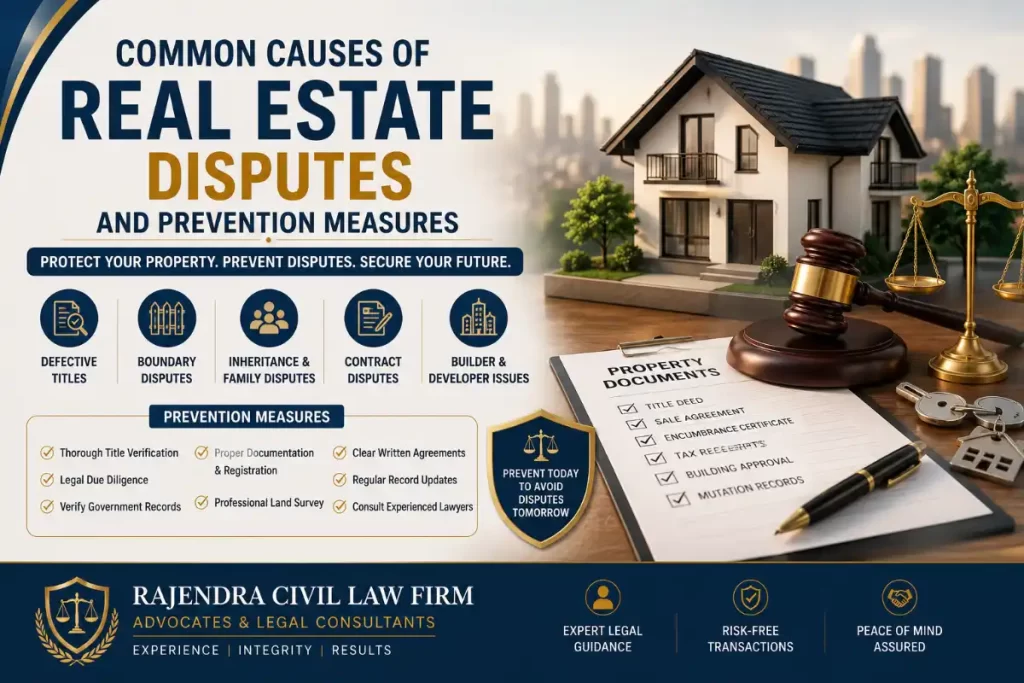
- Defective title documents
- Multiple ownership claims
- Encroachments
- Inheritance disputes
- Forged documents
- Boundary conflicts
- Breach of contracts
- Illegal construction
- Revenue record discrepancies
Identifying these risks before purchasing or developing property can prevent years of legal complications.
Common Causes of Real Estate Disputes
1. Defective Property Titles
One of the leading causes of real estate disputes is a defective title.
A title may become defective due to:
- Missing ownership documents
- Incomplete chain of title
- Forged sale deeds
- Unregistered transactions
- Clerical errors in records
A defective title can affect ownership rights and create difficulties during resale, financing, or inheritance.
Prevention Measures
- Conduct a comprehensive title verification.
- Obtain legal due diligence reports.
- Verify ownership history for at least 30 years.
- Examine registration records carefully.
2. Boundary and Encroachment Disputes
Boundary disputes occur when neighboring owners disagree about property limits.
Common issues include:
- Encroachment of land
- Construction beyond boundaries
- Fence disputes
- Road access disagreements
- Survey mismatches
Boundary disputes frequently result in injunction suits and prolonged litigation.
Prevention Measures
- Conduct professional land surveys.
- Install clear boundary markers.
- Verify survey sketches before purchase.
- Periodically inspect property boundaries.
3. Inheritance and Family Property Disputes
Family disputes often arise after the death of property owners.
Common situations include:
- Disputes among legal heirs
- Challenges to wills
- Partition disagreements
- Claims by omitted family members
- Joint family property conflicts
Family property disputes constitute a substantial portion of civil litigation in India.
Prevention Measures
- Execute legally valid wills.
- Register family settlements.
- Maintain updated succession records.
- Clearly document ownership interests.
4. Fraudulent Property Transactions
Real estate fraud has become increasingly sophisticated.
Examples include:
- Forged sale deeds
- Impersonation of owners
- Fake power of attorney documents
- Double sales
- Fabricated title records
Victims often discover fraud only after significant financial losses.
Prevention Measures
- Verify original title documents.
- Conduct independent legal due diligence.
- Confirm identity of sellers.
- Obtain Encumbrance Certificates.
- Verify registration records with authorities.
5. Multiple Ownership Claims
Disputes frequently arise when several individuals claim ownership over the same property.
This may result from:
- Unregistered transactions
- Competing agreements
- Inheritance disputes
- Defective transfers
- Prior undisclosed sales
Prevention Measures
- Verify title history thoroughly.
- Review pending litigation records.
- Conduct public notice verification.
- Confirm possession and ownership before purchase.
6. Contract and Sale Agreement Disputes
Property transactions often involve detailed agreements.
Disputes may arise due to:
- Failure to complete sale
- Non-payment of consideration
- Delay in registration
- Misrepresentation
- Breach of contractual obligations
Prevention Measures
- Use professionally drafted agreements.
- Clearly define obligations.
- Include dispute resolution clauses.
- Maintain payment records.
7. Builder and Developer Disputes
Property purchasers frequently encounter disputes with builders.
Common complaints include:
- Delayed possession
- Construction defects
- Unauthorized modifications
- Lack of approvals
- Failure to provide promised amenities
Prevention Measures
- Verify project approvals.
- Check regulatory registrations.
- Review builder credentials.
- Examine construction agreements carefully.
8. Landlord-Tenant Conflicts
Landlord-tenant disputes can disrupt both residential and commercial properties.
Common issues include:
- Non-payment of rent
- Illegal eviction
- Security deposit disputes
- Lease violations
- Unauthorized occupation
Prevention Measures
- Execute written lease agreements.
- Define rights and obligations clearly.
- Maintain rent payment records.
- Conduct periodic inspections.
9. Revenue Record and Mutation Errors
Ownership disputes frequently arise due to discrepancies in revenue records.
Examples include:
- Incorrect mutation entries
- Patta transfer disputes
- Survey number errors
- Classification mistakes
Revenue records often become crucial evidence in property litigation.
Prevention Measures
- Regularly verify revenue records.
- Correct discrepancies promptly.
- Maintain updated patta and tax records.
10. Easement and Access Rights Disputes
Property owners sometimes disagree regarding:
- Access roads
- Common pathways
- Water usage rights
- Drainage facilities
- Shared amenities
These disputes are particularly common in rural and semi-urban areas.
Prevention Measures
- Document easement rights properly.
- Verify access arrangements before purchase.
- Register agreements relating to common usage.
How to Prevent Real Estate Disputes?
Preventing disputes is significantly easier and less expensive than resolving them through litigation.
Conduct Comprehensive Legal Due Diligence
Before purchasing property:
- Verify title documents
- Examine ownership history
- Review litigation records
- Check government approvals
Obtain Professional Legal Opinion
Experienced property lawyers can identify risks that may not be apparent from documents alone.
Verify Government Records
Check:
- Patta records
- Revenue records
- Encumbrance Certificates
- Survey records
- Municipal approvals
Ensure Proper Registration
Unregistered documents often become a source of future disputes.
Maintain Complete Documentation
Preserve:
- Sale deeds
- Agreements
- Tax receipts
- Survey reports
- Court orders
Perform Regular Property Audits
Periodic reviews help detect problems before they escalate.
What Measures Can Prevent Real Estate Disputes?
The most effective prevention measures include:
- Thorough title verification.
- Independent legal due diligence.
- Professional land surveys.
- Proper registration of documents.
- Verification of government approvals.
- Timely mutation and record updates.
- Clear written agreements.
- Regular monitoring of property records.
- Early legal intervention when issues arise.
- Consulting experienced property lawyers before transactions.
Real Estate Dispute Prevention Checklist
- Before purchasing any property, ensure that you have:
- Verified ownership history
- Obtained Encumbrance Certificate
- Examined title documents
- Verified survey records
- Confirmed possession status
- Checked pending litigation
- Verified government approvals
- Conducted legal due diligence
- Executed properly drafted agreements
- Obtained professional legal opinion
Frequently Asked Questions (FAQ)
What is the most common cause of real estate disputes?
Defective title documents, ownership conflicts, and boundary disputes are among the most common causes of real estate litigation.
Can real estate disputes be prevented?
Many disputes can be prevented through proper legal due diligence, title verification, professional surveys, and well-drafted agreements.
Why is title verification important?
Title verification confirms lawful ownership and identifies defects that may lead to future disputes.
How can buyers avoid property fraud?
Buyers should verify original documents, review government records, obtain legal opinions, and conduct independent due diligence before purchase.
What measures can prevent real estate disputes?
Preventive measures include title verification, legal due diligence, professional surveys, record maintenance, and proper registration of documents.
When should I consult a property lawyer?
You should consult a property lawyer before purchasing property, executing agreements, transferring ownership, or whenever ownership disputes arise.
Conclusion
Real estate disputes can lead to substantial financial losses, delayed transactions, and prolonged litigation. However, many of these disputes are entirely preventable through proper planning, documentation, verification, and legal guidance.
Property owners who invest in preventive legal measures significantly reduce the risk of ownership conflicts, title defects, encroachments, inheritance disputes, and contractual disagreements.
At Rajendra Civil Law Firm, we assist clients with property due diligence, title verification, legal opinions, documentation review, dispute prevention strategies, and real estate litigation services to protect their valuable property interests and ensure legally secure transactions.
Read More
- Resolving Real Estate Disputes: Expert Legal Guidance and Representation
- Real Estate Dispute Resolution: A Complete Guide for Property Owners
- Expert Legal Services for Property Matters
- How to file a civil case in Chennai ?
- Expert Notarization Services in Chennai | Affidavits, POA, Property Documents