
The construction industry is one of the most dynamic and essential sectors in any economy. Yet, it is also one of the most dispute-prone. From design flaws and contract breaches to delays and workplace accidents, the potential for conflict is ever-present. When such issues arise, they often lead to construction liability lawsuits, which can be complex, time-consuming, and expensive.
At Rajendra Civil Law Firm, we have seen how a well-planned legal strategy can turn a potential crisis into a manageable solution. Construction disputes do not just involve money—they affect reputations, timelines, and future opportunities. This article explains the key aspects of construction liability lawsuits and outlines essential strategies for success in managing and resolving them effectively.
Construction Liability Lawsuits: Essential Strategies for Success: Rajendra Civil Law Firm
Understanding Construction Liability Lawsuits
A construction liability lawsuit arises when one party in a construction project—such as the contractor, subcontractor, architect, engineer, or property owner—is accused of failing to meet contractual obligations or causing damage, delay, or loss. These lawsuits often involve a wide range of legal issues, including negligence, breach of contract, defective workmanship, and safety violations.
Construction projects typically involve multiple parties and contracts, making it easy for misunderstandings and overlapping responsibilities to occur. Therefore, identifying who is legally liable becomes crucial to any case.
Common Causes of Construction Liability Disputes
Several factors can give rise to construction liability lawsuits. Understanding them is the first step toward preventing or defending against them.
- Defective Workmanship:
Poor-quality construction or non-compliance with approved designs often leads to structural issues, water leakage, or safety hazards. - Delay in Completion:
Delays in completing projects can result in heavy financial losses and penalties. They often occur due to supply issues, weather, or mismanagement. - Breach of Contract:
When any party fails to fulfill the terms agreed upon—such as payment schedules, quality standards, or timelines—a breach occurs. - Professional Negligence:
Errors by architects, engineers, or consultants in design or supervision can lead to significant damages and liability. - Safety and Workplace Accidents:
Injuries to workers or visitors at a construction site can trigger liability claims under labor and safety laws. - Material Defects:
Use of substandard or counterfeit materials can result in product liability claims against suppliers or contractors. - Environmental Non-Compliance:
Violating environmental regulations during construction may lead to penalties and lawsuits from affected parties or regulatory bodies.
Each of these issues can have severe financial and legal consequences. However, with the right legal strategy, parties can manage risks effectively.
Key Legal Principles in Construction Liability Cases
Every construction liability case is governed by a combination of contract law, tort law, and statutory regulations. Some essential principles include:
- Duty of Care: Every professional involved in construction has a duty to perform their work with reasonable care and skill.
- Breach of Contract: If one party fails to meet contractual terms, the other party can claim damages or specific performance.
- Negligence: A party may be liable if their carelessness causes harm to another or results in financial loss.
- Vicarious Liability: Employers may be held responsible for the actions of their employees during the course of employment.
- Strict Liability: In some cases, liability exists regardless of fault—especially for defective products or hazardous activities.
Understanding these principles helps determine who is at fault and how to build a strong case for defense or claim.
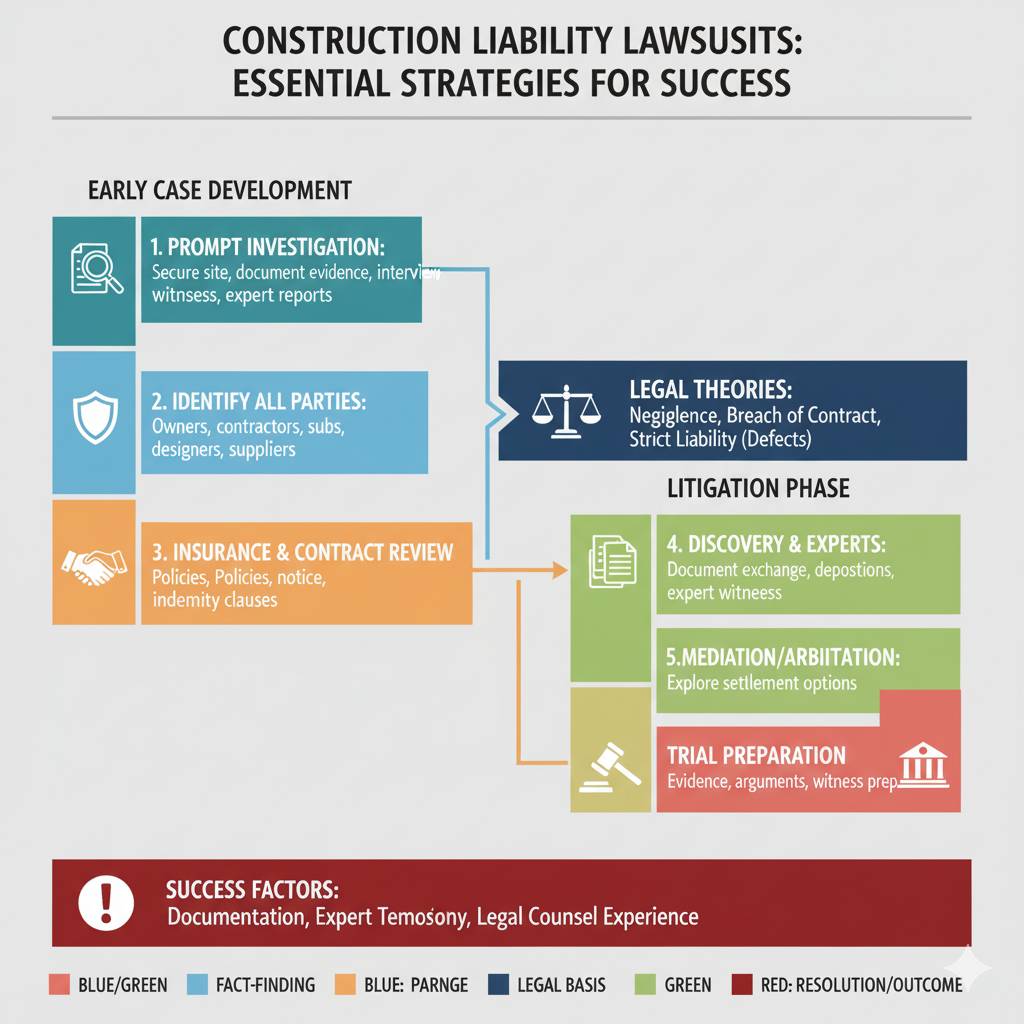
Essential Strategies for Success in Construction Liability Lawsuits
At Rajendra Civil Law Firm, we believe that success in construction liability cases depends on proactive planning, clear documentation, and strategic legal action. Let’s explore the key strategies that can help individuals and companies navigate such disputes effectively.
1. Establish Strong Contractual Foundations
Every successful defense begins with a well-drafted contract. Clear, detailed, and comprehensive agreements reduce ambiguity and prevent disputes. Contracts should specify:
- Scope of work
- Payment terms
- Timelines
- Quality standards
- Dispute resolution mechanisms
Including clauses on arbitration, mediation, or jurisdiction ensures smoother handling if disputes arise later. We always advise clients to review contracts thoroughly before signing to avoid surprises.
2. Maintain Proper Documentation
Documentation is your strongest defense. Maintain detailed records of:
- Communication between all parties
- Project timelines and milestones
- Change orders and approvals
- Invoices, payments, and delivery notes
- Inspection and safety reports
In court or arbitration, well-organized documentation can often determine the outcome. Even small details—like dated emails or site logs—can provide vital evidence.
3. Identify Liability Early
When a problem occurs, identifying the liable party quickly is critical. Whether it’s a design defect or material failure, early investigation can prevent escalation. Engage experts such as civil engineers, auditors, and surveyors to assess technical faults and prepare reports. This proactive approach helps control damage and strengthens your position in negotiations or litigation.
4. Prioritize Alternative Dispute Resolution (ADR)
Litigation in construction cases can be lengthy and costly. Therefore, mediation and arbitration are often preferred.
- Mediation promotes cooperation and preserves relationships by helping parties reach a voluntary settlement.
- Arbitration offers a binding resolution with confidentiality and speed.
Many modern construction contracts include ADR clauses, which can save both time and money. Our firm regularly assists clients in drafting and enforcing such clauses.
5. Engage Expert Witnesses
In complex technical disputes, expert witnesses can make or break a case. Qualified professionals—such as architects, engineers, or construction managers—can explain technical aspects in court and validate your claims or defenses. Their testimony adds credibility and clarifies complex evidence for judges or arbitrators.
6. Follow Safety and Compliance Protocols
Adhering strictly to safety standards, environmental norms, and labor laws can significantly reduce legal exposure. Ensure all licenses and permits are current. Regular safety training and documentation also help prove due diligence in the event of an accident.
7. Calculate and Document Damages
When claiming compensation, the ability to quantify losses precisely is vital. Document all costs incurred—such as repair expenses, lost profits, and project delays. This allows the court or arbitrator to assess fair compensation and avoids disputes over exaggerated claims.
8. Communicate Transparently
Transparent communication among contractors, clients, and consultants helps resolve issues early. Miscommunication often leads to unnecessary disputes. Keeping all parties informed about project changes or potential risks can build trust and prevent misunderstandings.
9. Work with Experienced Legal Counsel
Construction liability cases demand legal professionals with both technical and legal expertise. At Rajendra Civil Law Firm, our civil advocates combine in-depth knowledge of construction law with years of courtroom experience. We represent clients before civil courts, tribunals, and arbitration panels with a focus on timely and cost-effective outcomes.
Engaging the right legal team early can help you develop a strong defense strategy, gather evidence efficiently, and negotiate from a position of strength.
10. Prepare for Settlement and Trial
While most construction disputes settle before trial, being prepared for litigation strengthens your negotiating power. A well-prepared party signals seriousness, encouraging the other side to settle fairly. If settlement fails, be ready to proceed confidently in court with complete documentation and expert testimony.
Case Study Example
Consider a contractor accused of delay and poor workmanship in a commercial building project. Our legal team at Rajendra Civil Law Firm helped the client demonstrate that delays were caused by unforeseen site conditions and changes requested by the client, not negligence.
By presenting daily logs, correspondence, and expert reports, we established that the contractor had acted diligently. The case was resolved through arbitration, saving months of litigation and preserving the client’s business reputation.
This example illustrates how strategy, documentation, and expertise combine to achieve favorable outcomes.
Preventive Legal Measures for Construction Businesses
Winning lawsuits is important, but preventing them is even better. Here are some preventive measures that every construction business should adopt:
- Legal Review of Contracts: Get every major contract reviewed by a civil lawyer before signing.
- Insurance Coverage: Maintain comprehensive insurance for workers, equipment, and liability risks.
- Compliance Monitoring: Regularly review compliance with labor, safety, and environmental laws.
- Dispute Resolution Policy: Establish a clear internal policy to handle complaints before they escalate.
- Training and Supervision: Train staff and subcontractors on contractual obligations and safety protocols.
By adopting these proactive steps, construction businesses can minimize disputes and build stronger foundations for growth.
The Role of Rajendra Civil Law Firm
At Rajendra Civil Law Firm, we stand as a pillar of strength for clients facing construction-related legal challenges. Our team of civil advocates, arbitrators, and construction law specialists provides end-to-end legal support—from contract drafting to dispute resolution and litigation.
We represent individuals, companies, and developers in civil courts, arbitration tribunals, and high courts across India. Our focus is on practical, result-oriented strategies that protect client interests and maintain business relationships.
We believe that every dispute offers an opportunity for fair resolution when handled with the right legal strategy and professional guidance.
Frequently Asked Questions
A construction liability lawsuit is a legal action filed when a party suffers loss or damage due to negligence, breach of contract, or defective construction work. Parties such as property owners, contractors, subcontractors, architects, or engineers may be involved. For instance, if poor workmanship causes structural issues, the affected party can sue for damages or corrective action.
Disputes usually arise from project delays, defective materials, design errors, payment defaults, or violation of safety standards. Sometimes, unclear contract terms also cause misunderstandings. Identifying the root cause early and maintaining accurate documentation helps reduce the risk of litigation and financial loss.
Companies can avoid claims by drafting clear contracts, following safety and quality standards, maintaining site records, and obtaining proper insurance coverage. Regular compliance checks and communication with stakeholders can also prevent small issues from turning into costly lawsuits.
The best strategies include early identification of liability, preserving evidence, engaging expert witnesses, and using alternative dispute resolution methods like mediation or arbitration. At Rajendra Civil Law Firm, we help clients develop case-specific strategies that focus on fast and fair resolution while protecting business interests.
Construction disputes involve both technical and legal complexities. A civil law firm like Rajendra Civil Law Firm provides specialized legal support, prepares documentation, represents you before courts or arbitration panels, and ensures your rights are fully protected throughout the process.
Conclusion
Construction liability lawsuits are complex but manageable with the right approach. They involve not just legal expertise, but also deep understanding of technical and contractual details. By focusing on clear contracts, proper documentation, early liability identification, and expert legal advice, individuals and companies can navigate disputes effectively.
With years of experience and a reputation for excellence, Rajendra Civil Law Firm remains committed to delivering justice and ensuring that our clients’ projects and reputations stay strong.
Read More
- Top-Rated Advocates for Financial Fraud Cases in Chennai
- Company Strike Off: Navigating Legal Complexities with Ease – Legal Helpline
- Defending Cheque Bounce Cases: Legal Strategies That Deliver
- Central Administrative Tribunal (CAT) Matters: Expert Guidance
- Builders Disputes Resolved: Expert Legal Representation
- The Building and Other Construction Workers (Regulation of Employment and Conditions of Service) Act, 1996